
The beans are carefully sourced.
The milk is chosen.
The temperature is precise.
The latte art gets one final adjustment before the cup reaches the customer.
Then you add a plastic straw.
For an industry built around details, sometimes the smallest ones are the easiest to overlook.
As coffee season picks up and customers return to their favourite hot drinks, iced coffees and afternoon café rituals, September is a good time for coffee shops to look beyond what's inside the cup.
Because creating a more sustainable café isn't only about where your coffee beans come from.
It's also about the cup.
The straw.
The takeaway bag.
The napkins.
The food containers.
And the dozens of small disposable items that can leave the counter with every order.
Here are seven practical ways cafés can make every cup, and the experience around it, a little more thoughtful.
1. Start With the Straw
Let's start small.
Very small.
A straw might weigh almost nothing compared with the rest of a takeaway order, but cafés can use hundreds or thousands of them over time.
And not every drink actually needs one.
The first change is simple:
Stop automatically giving a straw with every drink.
For drinks that do need one, consider what alternatives are available.
Paper is probably the option most people know.
But it isn't the only one.
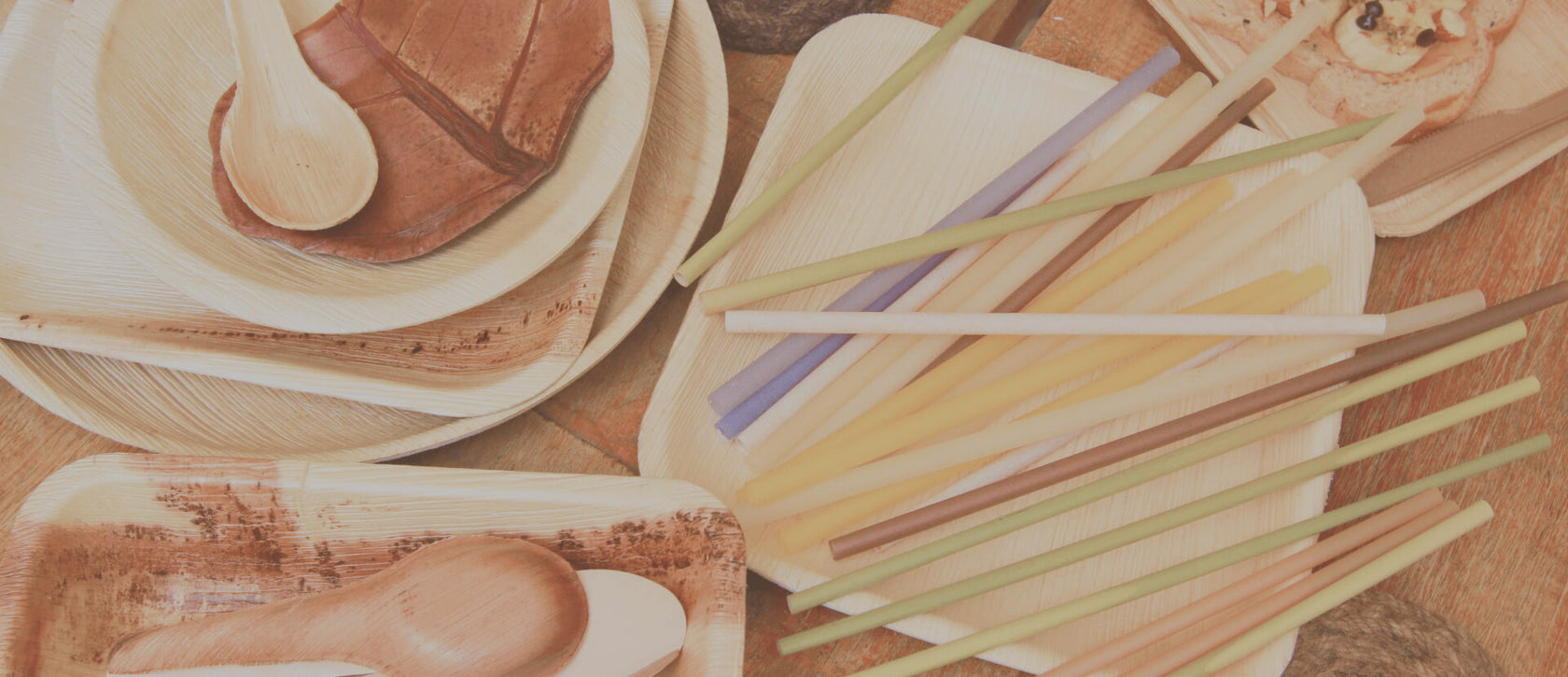
Today, straws can be made using a range of alternative materials, including agricultural ingredients such as rice, sugarcane and even coffee grounds.
Yes, coffee grounds.
For a café, that's where things get interesting.
A coffee straw made using coffee grounds doesn't just replace a conventional straw.
It gives you a story that naturally belongs in a coffee shop.
Your coffee straw used to be coffee.
That's much more memorable than simply telling customers you've switched to something "eco-friendly".
2. Give Coffee Grounds Another Life
Think about how much coffee your café makes in one day.
Now think about what's left behind.
Every espresso shot creates spent coffee grounds.
Multiply that by every cappuccino, flat white, americano and iced latte.
Then multiply that by 365 days.
That's a lot of coffee grounds.
Some cafés have started looking for ways to keep this material useful for longer.
Depending on local programmes and regulations, spent coffee grounds may find second-life applications in areas such as composting, gardening or material innovation.
Even if your café doesn't have access to a large-scale recovery programme, you can start by understanding how much organic waste you're producing.
Measure it for a week.
The result may surprise you.
Waste is much easier to rethink once you can actually see how much of it exists.
A simple café experiment:
For one week, separate spent coffee grounds from general waste.
At the end of each day, record the amount.
Then ask:
Could any of this be diverted from general waste?
The answer will depend on the waste infrastructure available where you operate, but asking the question is a good place to start.
3. Rethink the Takeaway Cup System
The takeaway cup is one of the most recognisable symbols of modern coffee culture.
Morning commute.
Coffee in hand.
Walk out the door.
Repeat tomorrow.
For cafés, the challenge isn't necessarily eliminating takeaway cups altogether.
It's reducing unnecessary single-use consumption where practical.
One approach is encouraging reusable cups.
But the programme needs to be easy.
A tiny sign hidden next to the till probably won't change much behaviour.
Instead, make reuse visible.
Train staff to ask:
“Did you bring your own cup today?”
Offer an incentive if it makes commercial sense.
Show reusable options near the ordering area.
If your café has a strong base of regular customers, consider a returnable cup programme where local infrastructure and operations make it practical.
The goal is to make reuse feel normal rather than inconvenient.
4. Don't Forget the Food Next to the Coffee
Coffee shops rarely sell only coffee anymore.
There's the croissant.
The sandwich.
The salad.
The banana bread you absolutely did not plan to buy until you saw it next to the register.
All of those products need packaging too.
So while you're reviewing cups and straws, look at the rest of the takeaway experience.
Are pastries automatically put into plastic packaging when a simple alternative could work?
Are takeaway meals using conventional plastic containers?
Are multiple bags being used unnecessarily?
Could certain food items use fibre-based packaging?
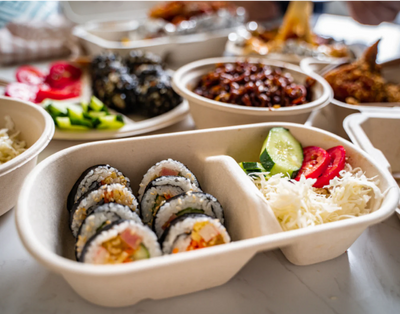
Sugarcane fibre, also known as bagasse, can be moulded into containers, plates, bowls and trays suitable for a range of food-service applications.
For cafés serving breakfast, lunch and takeaway food, this can provide another option when looking to reduce reliance on conventional single-use plastic.
The important thing is to test any alternative with your actual menu.
That beautiful fibre container still needs to survive the customer's journey back to the office.
5. Stop Giving Customers Things They Didn't Ask For
Open a typical takeaway order and count everything inside.
Napkins.
Cutlery.
Straws.
Sugar packets.
Stirrers.
Sauce.
Maybe two napkins.
Maybe five.
How much of it does the customer actually use?
One of the easiest ways to reduce waste is not to replace every disposable item with another disposable item.
It's to stop automatically providing things people don't need.
Ask before adding cutlery.
Keep straws available rather than automatically placing one in every drink.
Let customers choose sugar rather than adding packets by default.
For delivery orders, make cutlery optional where your ordering platform allows it.
These changes sound tiny.
That's the point.
A café doesn't need a dramatic sustainability transformation every month.
Small operational changes repeated across thousands of transactions can add up.
And reducing an unnecessary item also means you don't have to buy its replacement.
6. Learn What “Plant-Based” Actually Means
The sustainable packaging aisle has become crowded with green language.
Plant-based.
Natural.
Biodegradable.
Compostable.
Made from renewable resources.
They're appealing words.
But they don't always mean the same thing.
Take PLA, or polylactic acid.
PLA is a type of bioplastic commonly produced from sugars derived from renewable resources such as corn or sugarcane.
That means a product containing PLA can be described as plant-based.
But PLA is still a type of plastic.
This distinction is important for cafés specifically looking for products that are plastic-free or PLA-free.
Don't assume.
Ask.
If a straw is described as "made from plants", find out what the complete material composition is.
If packaging says "compostable", check whether it requires industrial composting or is suitable for another specified environment.
If a product says "eco-friendly", ask what evidence supports the claim.
Better sustainability decisions often begin with better supplier questions.
7. Turn Sustainability Into Part of the Customer Experience
This is where cafés have an advantage over many other businesses.
Coffee is already about stories.
Where did the beans come from?
What altitude were they grown at?
What does this roast taste like?
Why does this processing method matter?
Customers who care about coffee are already accustomed to learning about the product in front of them.
So why not tell them about the rest of the experience?
If you've switched to a coffee-ground straw, tell them.
If your takeaway food uses sugarcane fibre containers, explain what they're made from.
If customers can bring reusable cups, make that visible.
If you've removed unnecessary single-use items, tell people why.
But keep it simple.
You don't need a 300-word sustainability manifesto next to the espresso machine.
Sometimes one sentence is enough:
“This straw is made using coffee grounds.”
That's interesting.
It creates a question.
And questions create conversations.
Why Coffee-Ground Straws Make Sense for Cafés
There's something particularly satisfying about pairing coffee with a straw made using coffee grounds.
Not because one straw is going to solve the world's waste problem.
It won't.
But because the material tells a story customers immediately understand.
Coffee is brewed.
Coffee grounds remain.
Instead of seeing those grounds only as waste, they can inspire new applications and materials.
For cafés, that creates a product choice that feels connected to what the business actually does.
EQUO Coffee Straws are designed for cafés, restaurants and beverage businesses looking for an alternative to conventional plastic straws while bringing something different to the customer experience.
And they have one particularly good conversation starter built in:
“Wait... this is made from coffee?”
Exactly.
Don't Let Sustainability Ruin the Drink
There's an important reality to acknowledge.
Customers may care about sustainability.
But they still want to enjoy their coffee.
A straw that collapses before the drink is finished isn't a great solution.
A lid that leaks isn't a great solution.
A container that becomes soggy on the journey home isn't a great solution.
For cafés, sustainability has to work alongside performance.
Before changing any packaging item, test it exactly as a customer would use it.
Put the straw into the drink.
Leave it there.
Try it with different beverages.
Test the takeaway container with your food.
Carry the cup around.
Put the order into a delivery bag.
Then ask:
Would I be happy receiving this?
If the answer is no, keep looking.
A more sustainable café shouldn't mean a worse café experience.
Your Sustainable Café Checklist
You don't need to change everything tomorrow.
Start with the items leaving your counter most often.
Ask yourself:
Straws: Are we giving them only when needed? Have we explored alternatives to conventional plastic?
Coffee grounds: Do we know how much we're throwing away?
Cups: Are reusable options easy and visible?
Food packaging: Have we reviewed alternatives for our takeaway menu?
Cutlery and napkins: Are we giving customers more than they need?
Materials: Do we actually know what's in the products we're buying?
Communication: Do customers understand the changes we've already made?
Pick one.
Fix it.
Then move to the next.
That's much more manageable than trying to redesign the entire café overnight.
Small Details Say a Lot About a Café
Customers might come through the door because of your beans.
They might return because the barista remembers their order.
They might photograph the latte art.
They might tell their friends about the pastry.
But all the little details around those moments shape how they remember your brand.
Packaging is one of those details.
A conventional plastic straw might be used for 20 minutes and forgotten.
A straw made with coffee grounds?
That might make someone stop and ask what it's made from.
And suddenly, something as ordinary as a straw becomes part of the café's story.
Make Every Cup Count
Building a more sustainable coffee shop doesn't require perfection.
It requires attention.
Attention to what you're buying.
Attention to what you're throwing away.
Attention to what customers actually need.
And attention to the small products that leave your café hundreds of times every day.
Start with one cup.
One container.
One straw.
Then repeat.
At EQUO, we create alternatives for businesses looking to rethink everyday single-use products, including coffee, rice and sugarcane straws, as well as sugarcane food-service packaging.
Because a good coffee experience doesn't stop with what's inside the cup.
Sometimes, the smallest detail is the one customers remember.