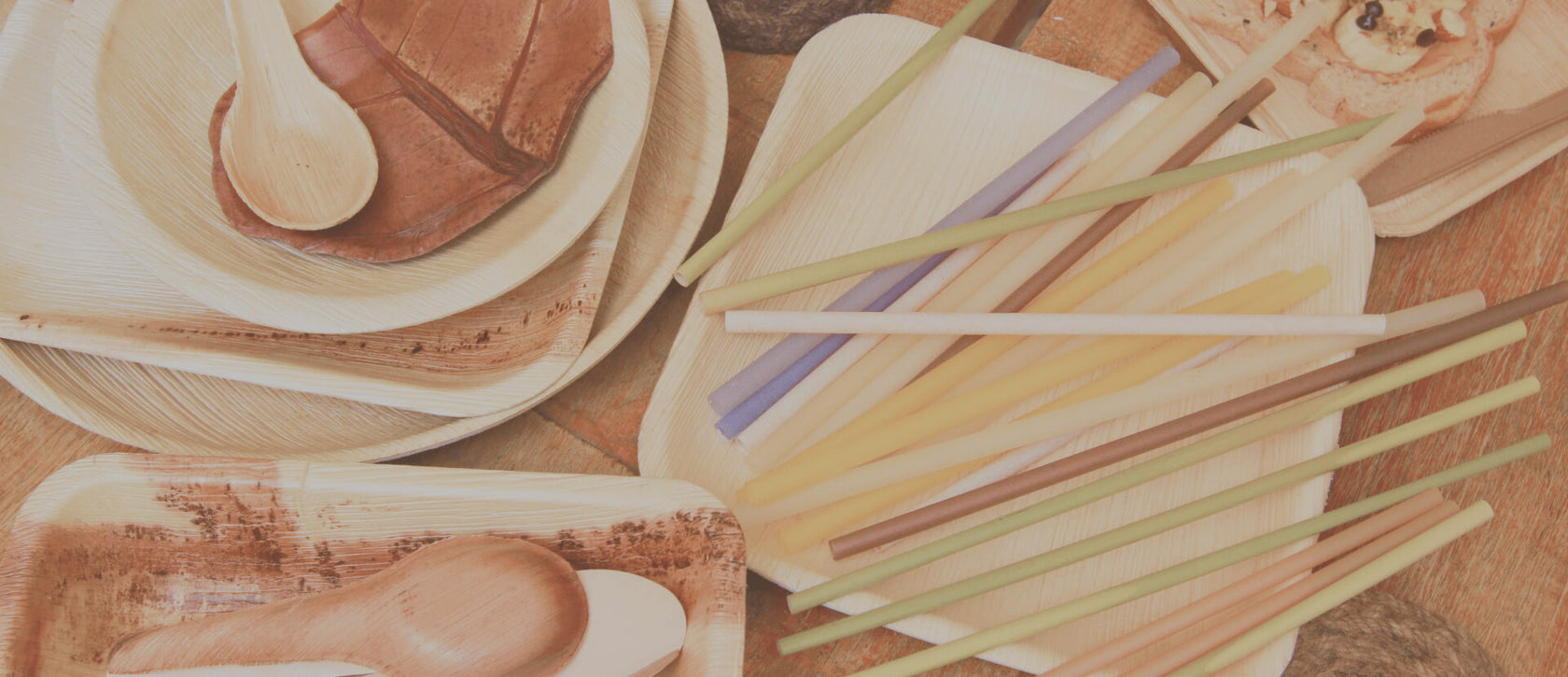

You pick up a straw labelled “plant-based”.
The packaging mentions sugarcane. Maybe it says biodegradable or compostable. Everything about it looks and sounds like an alternative to plastic.
So naturally, you assume one thing:
It must be plastic-free, right?
Not necessarily.
Some products marketed around plant-based materials may also contain PLA, or polylactic acid. PLA is made using renewable resources rather than fossil fuels, but here's the detail that's easy to miss:
PLA is still a type of plastic.
Confused? You're not alone.
Let's unpack what PLA actually is, why it's used in products marketed as sustainable, and what to look for if you're specifically searching for products that are PLA-free.
First Things First: What Is PLA?

PLA stands for polylactic acid, sometimes called polylactide.
It is a type of bioplastic commonly produced from sugars derived from renewable plant resources such as corn or sugarcane.
This is where much of the confusion begins.
Traditional plastics are commonly associated with fossil fuel-based raw materials. PLA, on the other hand, can begin with renewable agricultural resources.
That difference has led to terms such as:
plant-based plastic
bio-based plastic
bioplastic
But "plant-based" describes where the material comes from. It doesn't automatically mean the finished material is no longer plastic.
PLA is a polymer and is classified as a plastic.
So, Plant-Based Doesn't Mean Plastic-Free?
Exactly.
Think about these two statements:
"Made using plant-based materials."
and
"Plastic-free."
They sound similar when you see them on packaging, but they don't necessarily mean the same thing.
A product can contain a plastic made from plant-derived feedstocks.
This distinction matters because shoppers increasingly use words such as "plant-based", "natural" and "compostable" as shortcuts when deciding which products to buy.
The front of the package may only tell part of the story.
Why Is PLA Used in Straws and Food-Service Products?

PLA has properties that can make it useful in disposable food-service applications.
Depending on how a product is designed, PLA can help provide characteristics such as structure, rigidity or durability.
This is why it can appear in products including:
-
Drinking straws
-
Cold beverage cups
-
Cup linings
-
Food packaging
-
Disposable utensils
-
Films and coatings
A product might therefore highlight a renewable ingredient such as sugarcane while also using PLA as part of its material composition.
That doesn't automatically mean the product is misleading.
The important question is whether the material composition and environmental claims are communicated clearly enough for customers to understand what they're actually buying.
Is PLA Biodegradable?
This is where things become more complicated.
PLA can biodegrade under certain conditions, but that does not mean a PLA product will quickly break down wherever it is discarded.
Temperature, moisture, microorganisms, time and the surrounding environment can all affect how materials break down.
In other words:
"Biodegradable" should never be interpreted as "throw it anywhere and it disappears."
A product that can biodegrade under controlled conditions may behave very differently when it ends up in an unsuitable waste stream or in the natural environment.
That's why understanding disposal requirements matters just as much as understanding what a product is made from.
What About “Compostable”?
This is another word worth looking at more closely.
Not all composting environments are the same.
Some materials are designed for industrial composting facilities, where temperature, moisture and other conditions can be carefully controlled.
Home composting happens under very different conditions.
So when you see the word "compostable", don't stop there.
Look for more information:
Is it home compostable or industrially compostable?
Has the claim been independently certified?
What conditions are required?
Are those disposal facilities available where you live?
The more specific the information, the more useful the claim becomes.
The Problem Isn't the Word “Plant-Based”
Plant-based materials can play an important role in developing alternatives to conventional fossil-based products.
The problem comes when broad sustainability language creates an impression that goes beyond what the product can actually demonstrate.
Imagine seeing these words on a package:
Plant-Based
Made from Sugarcane
Eco-Friendly
Green
It's understandable that a shopper might interpret them as meaning the product contains no plastic.
But unless the product specifically says plastic-free or PLA-free, that conclusion may not be accurate.
That's why material transparency matters.
How to Look Beyond the Green Claims

You shouldn't need a chemistry degree to buy a drinking straw.
A few simple questions can help you evaluate sustainability claims more confidently.
1. What is the product actually made from?
Look beyond the largest claim on the front of the packaging.
Check the materials and product specifications.
2. Does it contain PLA?
If avoiding bioplastics is important to you or your business, look specifically for PLA information rather than assuming "plant-based" means PLA-free.
3. What does “compostable” mean for this particular product?
Check whether the claim refers to home composting, industrial composting or another specified environment.
4. Is there independent verification?
This is one of the most important questions.
There is a big difference between a brand making a claim about itself and a product being assessed against defined requirements by an independent organisation.
Look for recognised certification marks and supporting documentation.
Where EQUO Takes a Different Approach

At EQUO, material transparency is an important part of how products are developed and communicated.
Rather than asking customers to rely solely on words such as "green" or "plant-based", EQUO's products can be supported by independent testing and certification relevant to specific material claims.
For selected EQUO products, this includes verification for two important characteristics:
PLA-FREE
and
PFAS-FREE
These certifications give customers something more concrete than a sustainability slogan.
They provide evidence behind the claim.
What Does PLA-Free Mean?
PLA-free means the product does not rely on polylactic acid as part of its material composition, according to the scope and criteria of the relevant verification.
This distinction is especially useful when comparing products that may look nearly identical.
Two straws might both appear natural.
Both might reference plants.
Both might be positioned as alternatives to conventional plastic.
But their actual material compositions can be different.
That's why EQUO encourages customers to look beyond appearance and marketing language and check what the product is actually made from.
And What About PFAS-Free?
PFAS refers to a broad group of synthetic chemicals that have been used across many industries because of properties such as resistance to water, grease and heat.
For food-contact products, growing awareness around PFAS has made transparency increasingly important.
A PFAS-free verification provides customers and businesses with additional information when evaluating the materials used in the products they purchase.
For restaurants, cafés and food-service operators, these details can also help procurement teams make more informed packaging decisions.
Claims Are Easy. Proof Matters More.
The sustainability aisle has developed its own vocabulary.
Eco-friendly.
Green.
Natural.
Plant-based.
Biodegradable.
Compostable.
These words aren't necessarily meaningless, but without context they can leave consumers filling in the gaps themselves.
That's why one of the most useful habits you can develop is surprisingly simple:
Don't just look at the claim. Look for the proof behind it.
What is the product made from?
What does the certification actually verify?
What conditions are required for disposal?
Who tested or certified the claim?
The answers tell you much more than a green leaf printed on the package ever could.
Better Choices Start with Better Information
PLA isn't something consumers need to be afraid of.
It's a material that needs to be understood.
Knowing that a product is made from plants doesn't automatically tell you whether it's plastic-free. Knowing that something is compostable doesn't tell you where or how it needs to be composted.
And knowing that a product looks sustainable doesn't tell you what's inside it.
The more transparent brands become about materials, testing and certifications, the easier it becomes for customers to make choices based on facts rather than assumptions.
At EQUO, that's exactly why certifications such as PLA-free and PFAS-free matter.
Because sustainability shouldn't depend on how convincing the packaging sounds.
Look beyond the claim. Look for the proof.
SEO Keywords: what is PLA, PLA plastic, polylactic acid, is PLA plastic, is PLA biodegradable, is PLA compostable, PLA free, PLA free straws, plant based plastic, bioplastic, compostable plastic, plastic free straws, PFAS free, sustainable straws