
Let’s have an honest moment in the safe space of the internet.
You’re at a holiday party. Someone hands you a beautifully crafted, expensive cocktail. It looks delicious. You take the first sip, and it’s pure magic. You set it down to chat for five minutes. You go back for a second sip, and suddenly... you are drinking wet cardboard pulp. Your straw has collapsed in on itself like a cheap tent in a windstorm. You spend the rest of the drink trying to suction liquified paper through a narrowed tube, eventually giving up and awkwardly trying to fish the ice cubes out with your fingers.
We have all been there. The collective sigh of frustration heard around the world when a paper straw dissolves is practically deafening.
Look, the intention behind paper straws was noble. We all agreed that single-use plastic was choking the planet and needed to go. Paper seemed like the easy, accessible fix. But five years into this grand experiment, we can admit the truth: the user experience is terrible.
It’s December 2025. We have self-driving cars and AI that can write poetry. Surely, we deserve a sustainable drinking straw that doesn’t disintegrate in liquids.
The good news? We do. And this holiday season is the perfect time to upgrade your hosting game and banish the "soggy straw blues" forever.
The Science of Soggy: Why Paper Fails
Why do paper straws fail so spectacularly? It’s simple physics. Paper is absorbent. Its job is to soak up liquid (think paper towels). To make a paper straw, manufacturers have to glue layers of paper together and often coat them with beeswax or, ironically, thin layers of bioplastic to make them water-resistant.
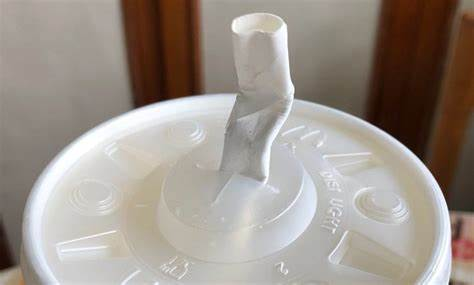
But as soon as that straw hits your Gin & Tonic, the clock starts ticking. The liquid inevitably finds a seam or a crack in the coating. The cellulose fibers swell, the food-grade glue begins to break down, and the structural integrity vanishes. Add ice to the mix—which bangs against the straw, creating micro-abrasions—and you accelerate the process.
Hot drinks? Forget about it. Heat dissolves the glues even faster.
For years, we accepted this as the "sustainability tax." We thought that to be green, we had to suffer through a subpar drinking experience.
The "Better Than Plastic" Myth
There is a pervasive myth that if a disposable item isn't paper, it must be some form of "greenwashed" plastic.
This is where 2025 is changing the game. The most exciting innovations in sustainable tableware aren't trying to improve paper; they are looking to nature's own designs. We are talking about materials that grow in tube shapes or have naturally dense fibers that repel water without needing chemical coatings.
We don't need to engineer a new material in a lab; we just need to look at what the earth is already growing in places like Vietnam.
Enter EQUO: The Battle-Tested Alternatives
At EQUO, we decided early on that we weren't going to mess with paper. Our mission was to find 100% plastic-free, compostable alternatives that actually perform under pressure.
If you’re hosting this holiday season, here is your arsenal against sogginess:
1. The Cocktail Champion: Grass Straws
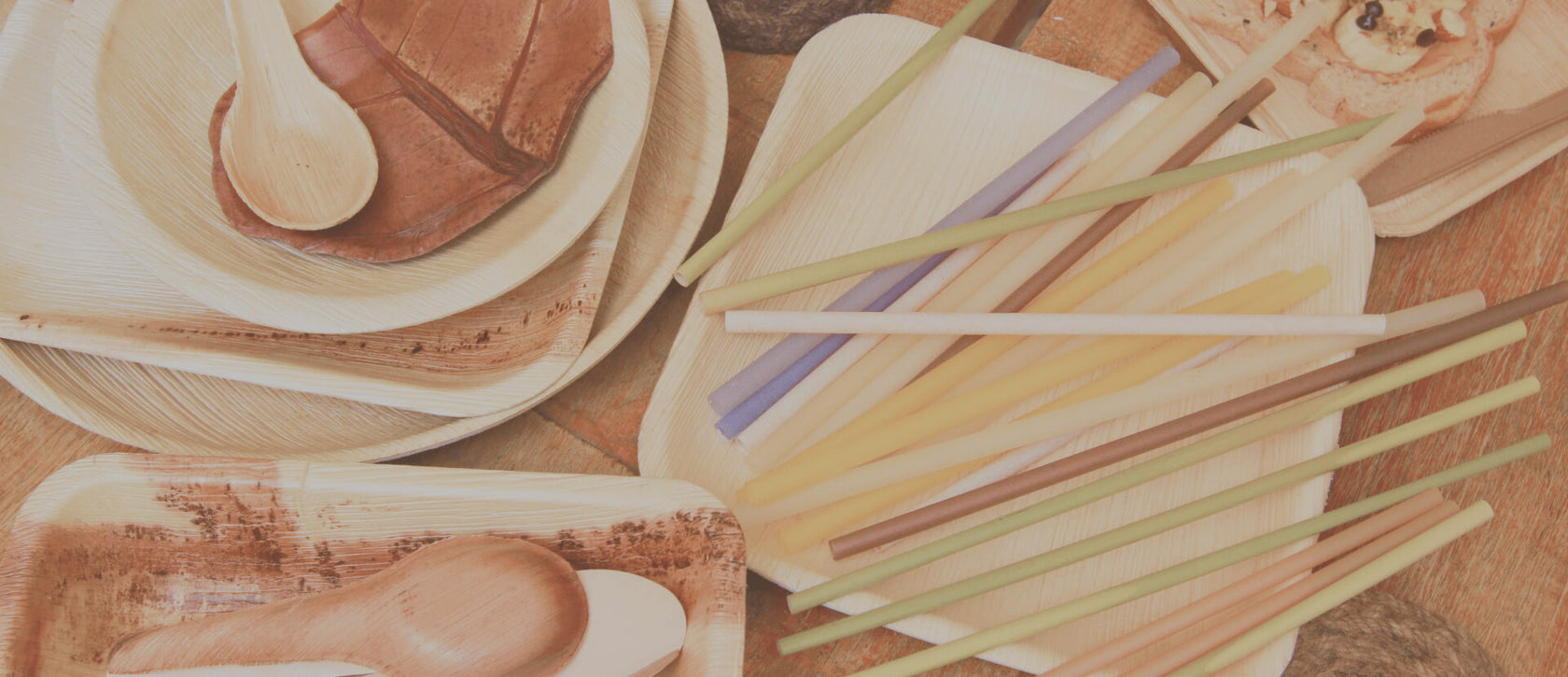
These are our sleekest option. Made from dried sedge grass, they are naturally hollow. They don't need glues or pulping. They are just... grass.
-
Why they don't get soggy: The natural exterior of the grass stem is designed by nature to be water-resistant. They have a slight natural waxiness that repels liquid.

-
The Vibe: They are thin, elegant, and translucent green. Perfect for fizz, highballs, and anything in a crystal glass.
2. The Heavy Hitters: Sugarcane and Coffee
Sometimes you need a straw with girth. You need something that can handle a thick smoothie, a milkshake, or a glass packed with crushed ice.
-
Sugarcane Straws: Made from bagasse (the fibrous pulp left over after sugar production). They are incredibly dense and sturdy. You can literally chew on these, and they won’t collapse. They have a light, sweet aroma but won't flavor your drink.

-
Coffee Straws: Made from recycled coffee grounds. These are dark, moody, and robust. They are fantastic for iced lattes or dark spirits.
These two options are so durable that many people rinse and reuse them multiple times throughout a day before composting them. Try that with a paper straw.
3. The Edible Option: Rice Straws
Made from rice flour and tapioca starch, these are basically very sturdy, uncooked noodles.
-
The Fun Factor: They come in natural colors derived from vegetables. They hold up great in cold drinks for dozens of minutes.
-
The Ultimate Biodegradability: If you are camping and drop one, an animal will probably eat it. If not, it dissolves in water over a day or two. They are completely harmless.
The Holiday Taste Test Challenge
This December, don't just take our word for it. If you are planning a holiday gathering, do a side-by-side test. Put a handful of paper straws in one jar and a mix of EQUO Grass and Cane straws in another.
Watch your guests. Watch the grimaces vanish. Watch people actually finish their drinks without having to remove the straw halfway through.
Ditching soggy isn't just about convenience. It’s about elevating the sustainable experience. When eco-friendly products work better than the old polluting ones, sustainability stops being a chore and starts being the obvious choice. Let's make 2025 the year we expect more from our straws.