
Your morning coffee has a surprisingly short life.
A few minutes to grind the beans.
A few seconds to pull an espresso.
Maybe 20 minutes to enjoy your latte.
And then?
The coffee grounds go straight into the bin.
For most of us, that's where the story ends.
But what if the leftovers from your morning brew could become something useful?
A garden ingredient.
A material for everyday objects.
Or even the straw in your next iced coffee.
This International Coffee Day, celebrated on 1 October, we're looking at something that rarely gets the spotlight: the coffee grounds left behind after brewing.
Because there's more to coffee than what's in your cup.
Your Coffee Has a Life After Brewing

Think about what goes into making a single cup of coffee.
Coffee beans are grown, harvested, processed, transported, roasted, ground and brewed.
By the time your drink reaches you, an entire supply chain has already done its job.
But brewing doesn't make the coffee grounds disappear.
It simply extracts some of the compounds that give coffee its flavour and aroma.
The remaining material, known as spent coffee grounds, still contains organic matter and compounds that may be useful in other applications.
For cafés, restaurants and coffee producers, this creates an interesting question:
Could something we normally throw away become a resource instead?
The answer depends on how the grounds are collected, processed and reused.
But researchers and businesses have already been exploring a range of possibilities.
Here are six ways coffee grounds can find a second life.
1. Coffee Grounds Can Become Compost
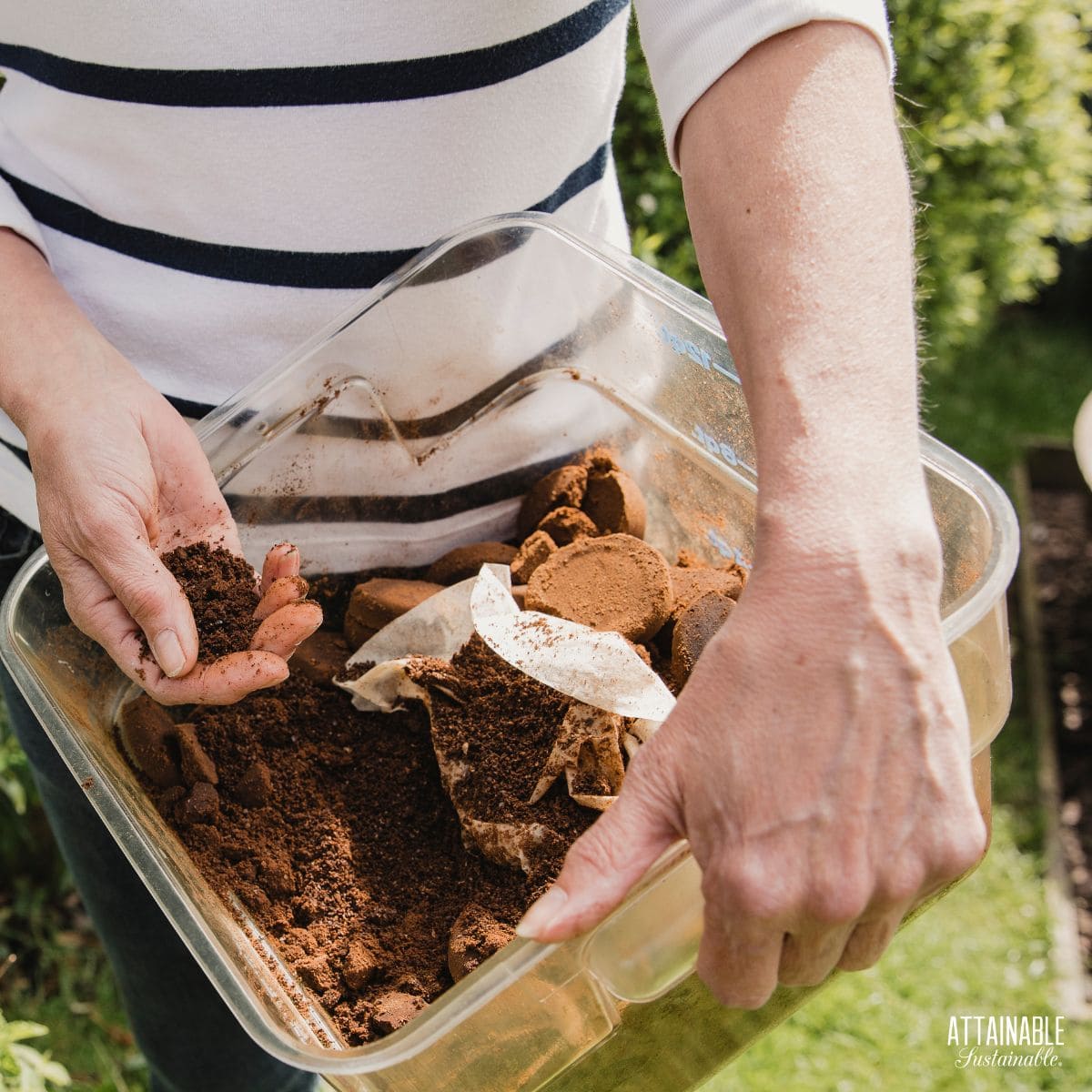
One of the most familiar ways to reuse coffee grounds is through composting.
Spent coffee grounds contain organic material that can contribute to a compost mixture.
When combined with other suitable materials, including dry leaves, cardboard and other organic waste, they can be processed into compost under appropriate conditions.
However, there's an important detail.
Coffee grounds shouldn't simply be piled into a garden in unlimited quantities.
Large amounts can compact, affect moisture movement and create an unbalanced growing environment.
For composting, a balanced mix of materials and proper management are important.
For cafés, collecting spent coffee grounds separately may create opportunities to work with local composting programmes.
Whether this is practical depends on the waste collection and composting infrastructure available in the area.
The first step is understanding how much coffee waste your business generates.
2. Coffee Grounds Can Be Used in Gardening
You've probably seen the internet tip:
"Don't throw away your coffee grounds. Put them on your plants!"
There's some truth behind the idea, but it needs context.
Coffee grounds contain organic matter and small amounts of nutrients.
They can be incorporated into compost or certain soil mixtures when used appropriately.
However, they aren't a universal fertiliser.
And adding large quantities directly to soil isn't necessarily beneficial for every plant.
If you're experimenting with coffee grounds in your garden, start with small amounts and consider the needs of the plants you're growing.
For coffee shops, a community gardening partnership can be an interesting way to explore reuse.
Imagine a local café collecting coffee grounds for a nearby garden project.
The material doesn't have to travel far, and customers can see a tangible connection between their daily coffee habit and a local initiative.
Of course, any collection programme should be organised to avoid contamination and ensure the grounds can be used appropriately.
3. Coffee Grounds Can Become New Materials

Here's where things get particularly interesting.
Coffee grounds don't have to remain coffee grounds.
Through processing and material innovation, they can be incorporated into products that look and function very differently from the original waste.
Researchers and manufacturers have explored coffee-derived materials for applications such as:
-
Composite materials
-
Household accessories
-
Decorative objects
-
Packaging-related materials
-
Consumer products
-
Drinking straws
The idea is to make use of material that would otherwise enter a waste stream.
Instead of viewing spent coffee grounds only as something to dispose of, they can become an ingredient in another manufacturing process.
However, products made using coffee grounds aren't necessarily made entirely from coffee.
Their complete composition depends on the manufacturing method and any additional ingredients or binders.
That's why material transparency remains important.
4. Yes, Coffee Grounds Can Become Drinking Straws
Imagine ordering an iced latte.
The barista hands you your drink.
You look at the straw.
It looks like an ordinary drinking straw.
Then someone tells you:
"That straw is made using coffee grounds."
Wait. What?
It's an unexpected idea, but that's what makes it interesting.
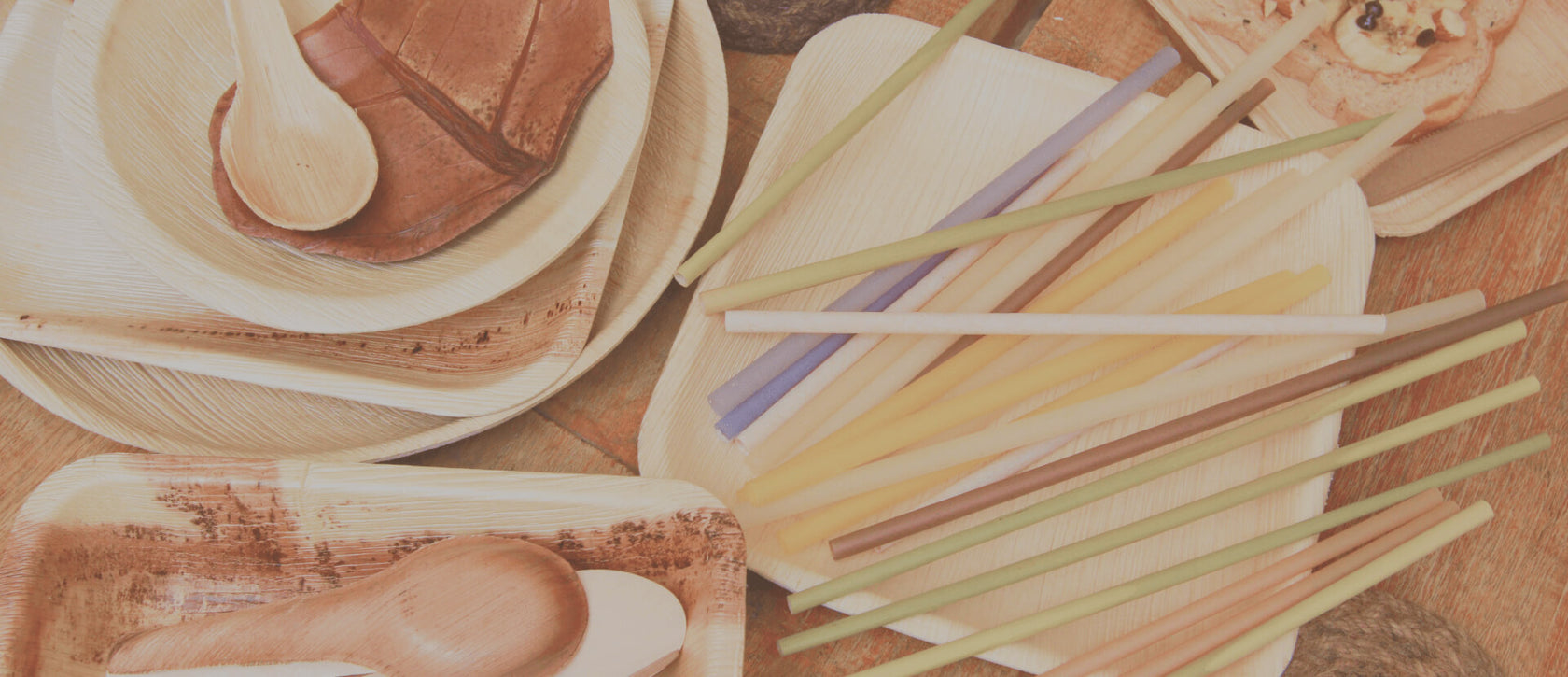
Coffee-ground straws use coffee-derived material as part of their composition, giving a familiar everyday product a different material story.
At EQUO, coffee-ground straws are one of the alternatives we offer for businesses looking to move away from conventional plastic straws.
And because different drinks need different straws, the range includes multiple sizes and styles.
Standard Size: For everyday beverages such as iced coffee, tea and juice.
Boba Size: A wider straw designed for drinks with tapioca pearls and other suitable toppings.
Angle Cut: An angled tip designed to pierce sealed bubble tea lids.
Cocktail Size: A shorter option for cocktails, mocktails and smaller drink presentations.
For cafés, bubble tea shops, restaurants and bars, this means the choice of straw can be matched to the drink rather than treating every beverage the same.
And there's a natural conversation starter built into the product.
Your coffee straw used to be coffee.
5. Coffee Grounds Are Being Explored for Energy Applications
Coffee grounds contain organic compounds that make them interesting for certain energy-related applications.
Researchers have investigated ways to process spent coffee grounds into products such as biofuels and solid fuel materials.
These applications require appropriate processing and technology.
They're not as simple as collecting coffee grounds from your espresso machine and turning them directly into fuel.
But they demonstrate how materials traditionally considered waste may have value in other industries.
Whether a particular application is environmentally or commercially beneficial depends on factors such as collection, transportation, processing energy and the final product.
That's an important distinction.
Finding a second use for waste is promising, but the full process still matters.
6. Coffee Grounds Can Inspire Better Product Design
Not every second-life application needs to happen inside a coffee shop.
Sometimes, the biggest opportunity is rethinking how everyday products are designed.
A material that has already served one purpose may be suitable for another.
That approach can encourage businesses to ask different questions during product development.
Instead of only asking:
"What new raw material should we use?"
They can also ask:
"Is there an existing material stream we could make better use of?"
This way of thinking is relevant far beyond coffee.
Agricultural by-products such as sugarcane fibre, rice-based materials and coffee grounds are being explored or used in different product applications.
At EQUO, these materials are central to our approach to everyday alternatives, including straws and food-service products.
It's not about claiming that every product made from agricultural materials is automatically sustainable.
It's about exploring different material choices and understanding how they perform.
What Can Coffee Shops Do With Their Coffee Waste?
If you operate a café, you don't need to launch a material innovation project tomorrow.
Start with something more practical.
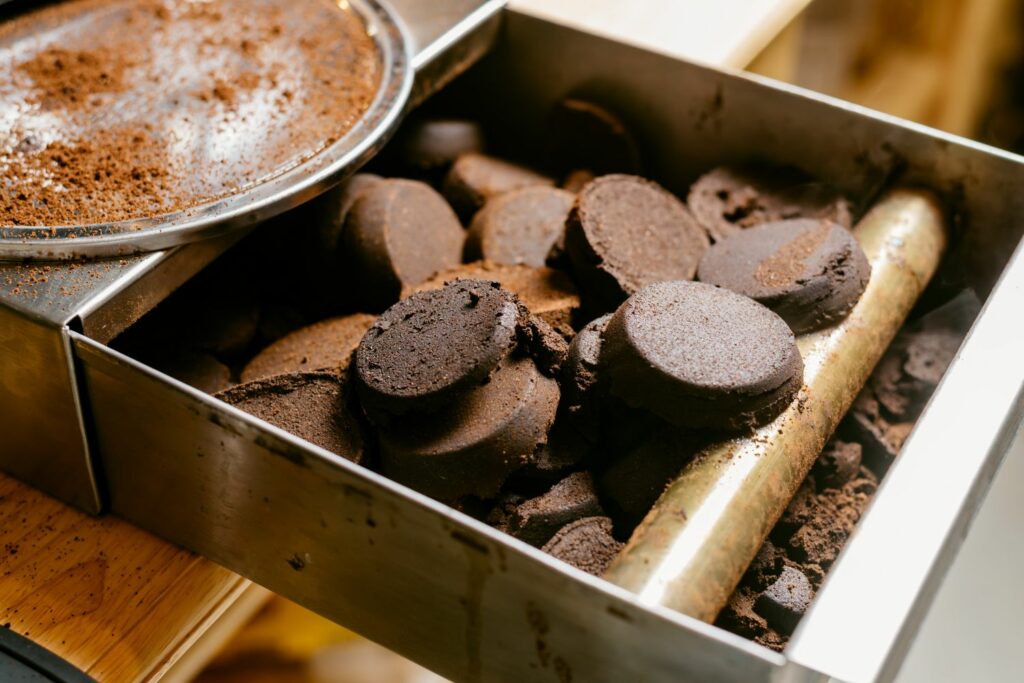
Measure Your Coffee Grounds
For one week, collect and weigh the spent coffee grounds your café generates.
Record the amount each day.
This gives you a clearer picture of the material leaving your business.
Explore Local Collection Options
Check whether composting services, community gardens or other suitable programmes accept spent coffee grounds in your area.
Confirm their collection requirements before setting anything up.
Reduce Contamination
If you're collecting coffee grounds for reuse, keep them separate from unsuitable waste.
A clean, consistent material stream is generally easier to manage than a mixture of food scraps, packaging and other rubbish.
Review Your Single-Use Products
Look at the products leaving your café with each order.
Cups.
Lids.
Straws.
Napkins.
Food containers.
Could some unnecessary items be eliminated?
Could reusable options work for certain customers?
Could appropriate alternative materials be considered?
Reducing waste isn't only about what happens to coffee grounds after brewing.
It's also about what goes into serving the coffee in the first place.
Not All “Coffee-Based” Products Are the Same
As products made using agricultural by-products become more visible, it's worth looking beyond the headline material.
A product described as coffee-based may contain other components.
The same applies to products marketed as plant-based.
For example, PLA, or polylactic acid, is a type of bioplastic commonly produced using sugars derived from renewable plant resources.
That means a product can be plant-based while still containing a type of plastic.
For businesses specifically seeking PLA-free products, checking the complete material composition is important.
And when suppliers make environmental claims, look for relevant supporting documentation.
Ask:
What materials are used?
Does the product contain PLA?
What conditions are required for disposal?
Which claims are independently verified?
The goal isn't to make sustainable purchasing unnecessarily complicated.
It's to make it more transparent.
A Coffee Straw Can Be More Than a Straw

Coffee shops are particularly good at storytelling.
Customers learn about bean origins.
Roast profiles.
Processing methods.
Brewing techniques.
The difference between an espresso and a pour-over.
So why shouldn't the materials surrounding the coffee have a story too?
Imagine a café introducing coffee-ground straws alongside a new seasonal drink.
A small sign at the counter reads:
"Your coffee straw used to be coffee."
It's simple.
Unexpected.
And relevant to the product being served.
That single sentence can start a conversation about materials, waste and how everyday objects are made.
For businesses, it also creates a distinctive detail within the customer experience.
A straw may be a small part of a drink.
But thoughtful details can make a brand more memorable.
Where EQUO Fits In
EQUO offers alternatives to conventional single-use plastic products using materials such as coffee grounds, rice and sugarcane.
Our coffee-ground straw range includes different sizes and styles for cafés, restaurants, bubble tea shops, bars and other beverage businesses.
From standard iced coffees to bubble tea and cocktails, the aim is to offer practical choices for different drink applications.
We also believe businesses should understand the materials behind the products they purchase.
That's why material transparency and appropriate verification remain important parts of the EQUO conversation.
Because an interesting material story is even stronger when it's supported by clear information.
This International Coffee Day, Look Beyond the Cup
Coffee has always been about transformation.
A seed becomes a bean.
A bean becomes a roast.
A roast becomes a drink.
And now, the story doesn't necessarily have to end after brewing.
Spent coffee grounds can be composted, explored for new material applications or incorporated into products that serve an entirely different purpose.
Not every reuse idea will be suitable for every café.
And not every coffee-derived product will have the same environmental characteristics.
But there's value in asking what else a familiar material might become.
This International Coffee Day, enjoy your favourite cup.
Appreciate the beans.
Thank your barista.
And spare a thought for the coffee grounds left behind.
Because sometimes, the most interesting part of coffee's story begins after the last sip.
Explore EQUO's coffee-ground straws and discover different sizes and styles for your café, restaurant or beverage business.