
When we tell people one of our best-selling products is a "Grass Straw," we usually get one of two reactions:
-
"Like... lawn clippings?"
-
"Will it taste like I'm eating a salad?"
The answer to both is no.
The grass we use isn't the stuff growing in your backyard. It is a specific species called Sedge Grass (Lepironia articulata), which grows wild in the wetlands of the Mekong Delta in Vietnam.
And honestly? It might just be the most perfect drinking straw Mother Nature ever designed. We didn't have to engineer it; we just had to find it.
The Problem with Manufacturing
Most "eco-friendly" straws require a lot of processing.
-
Paper straws need pulping, bleaching, gluing, and rolling.
-
Bioplastic (PLA) needs industrial fermenting and chemical synthesis.
-
Glass/Metal need high-heat smelting.
Grass straws? They grow out of the ground in the shape of a tube. They are naturally hollow.

The "Farm-to-Glass" Process
At EQUO, we like to think of our grass straws as "Farm-to-Table" for your drinks. The process is incredibly low-impact:
-
Harvesting: Local farmers in Vietnam harvest the grass by hand. This provides sustainable income for these communities and encourages the preservation of the wetland ecosystems (because the grass is valuable!).
-
Cleaning: The stalks are washed in salt water to sanitize them.
-
Cutting: They are cut to standard straw lengths (about 20cm).
-
Drying: They are baked in ovens to dry them out and harden them.
-
Packaging: That's it. No chemicals. No bleaches. No dyes. No glues.
Why You Will Love Them
If you hate the texture of paper straws, grass is your savior.
-
Soggy-Proof: Because the plant evolved to grow in water, the stem is naturally water-resistant. You can leave a grass straw in a drink for 24 hours, and it will still be rigid. You can even chew on it (nervous sippers, rejoice!), and it won't turn to mush.
-
Heat Resistant: Want a straw for your hot tea or coffee? Grass handles heat perfectly.
-
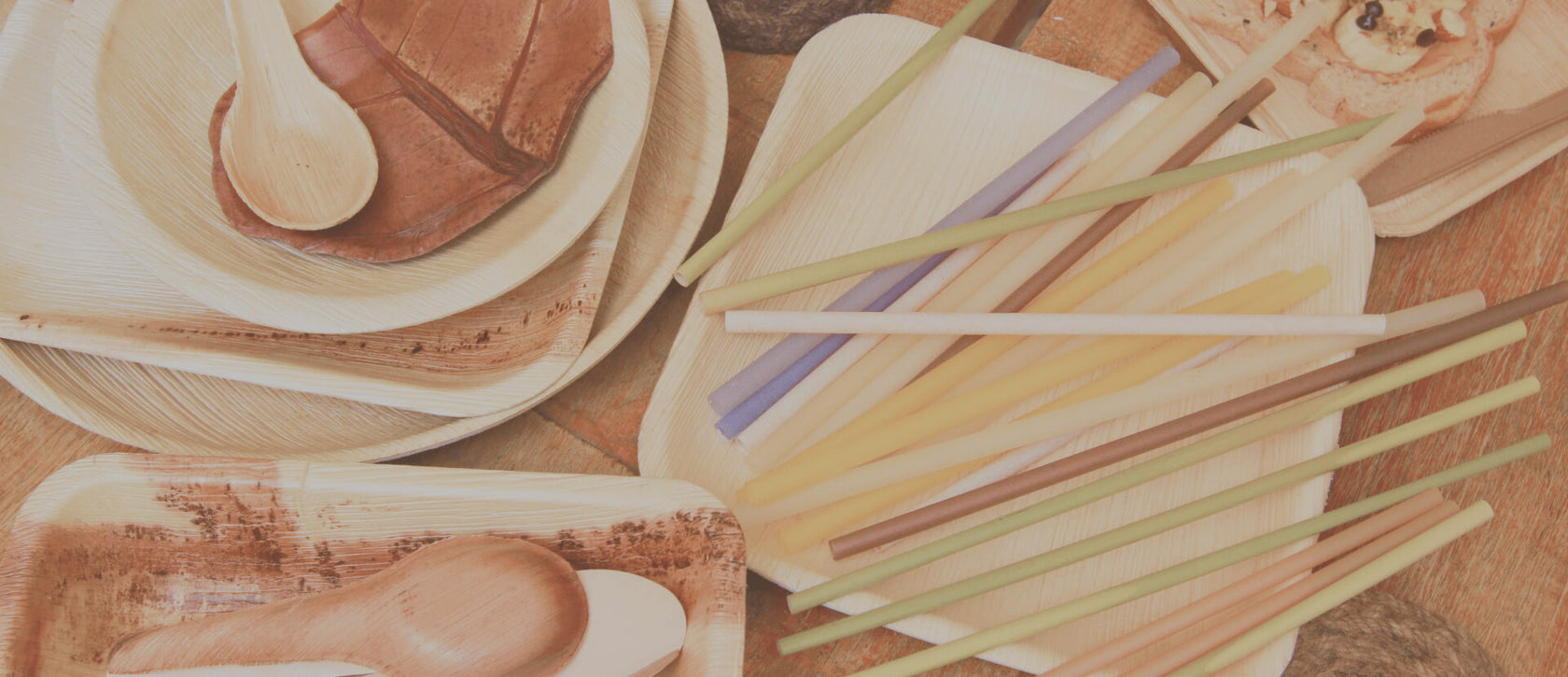
The Look: They are a beautiful, pale green color. They look organic and spa-like. In a cocktail, they act as a garnish.
-
The Sound: When you tap them against a glass, they make a satisfying "clink," almost like bamboo.

A Victory for Simplicity
In a world of over-engineered solutions, the grass straw is a humble reminder that nature usually knows best.
We tried to invent a better straw for decades, using polymers and factories. Meanwhile, the perfect straw was quietly swaying in the breeze in Vietnam, waiting for us to notice.
Switching to grass straws is one of the easiest, most effective swaps you can make. It supports farmers, protects wetlands, and saves you from the misery of paper pulp.