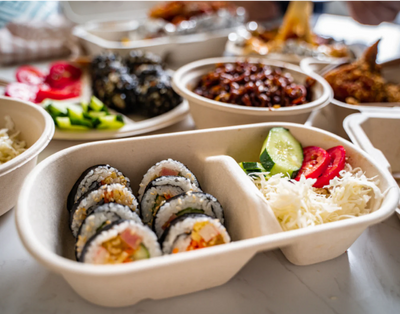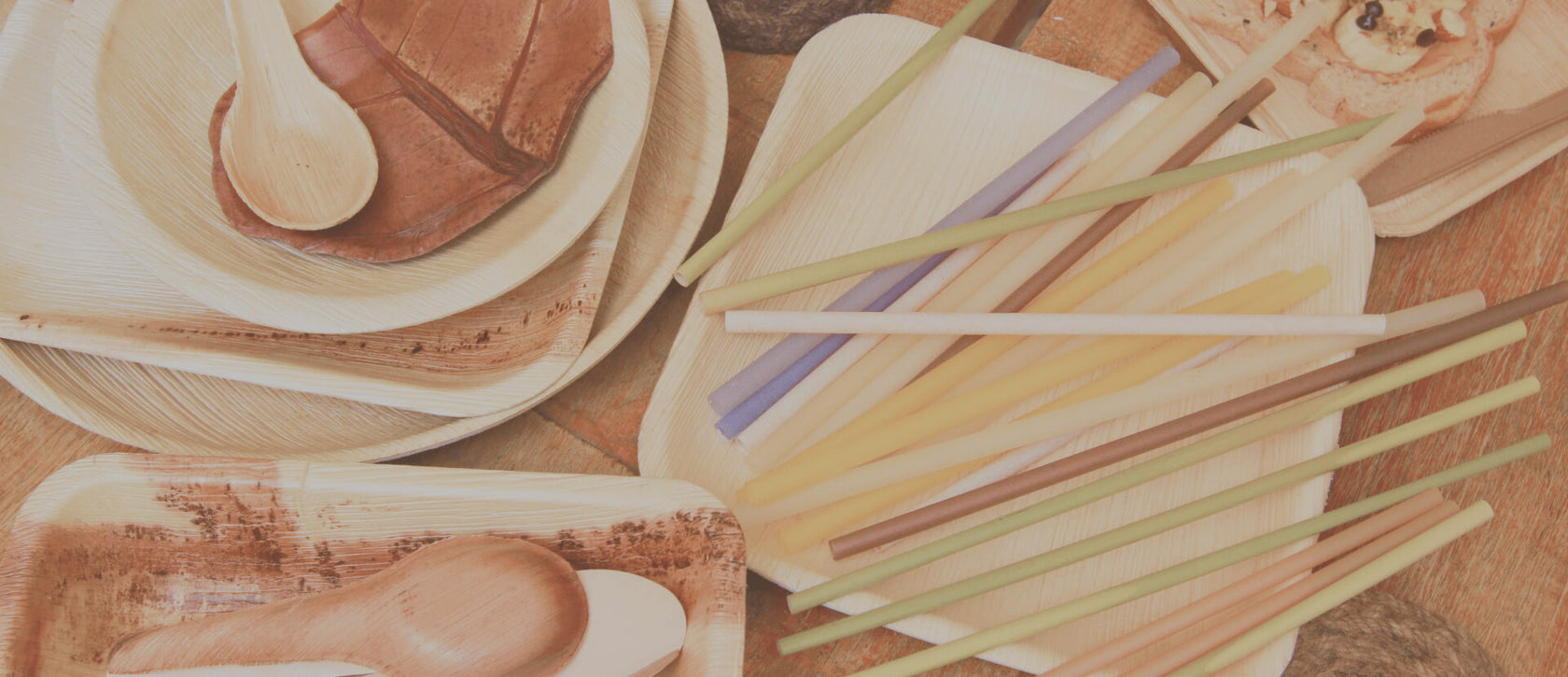

12:30 PM.
Your lunch arrives.
12:32 PM.
You open the container, take the first bite and forget about the packaging completely.
12:55 PM.
Lunch is finished.
12:56 PM.
The container goes into the bin.
And then?
For you, that's probably the end of the story.
For the container, it might only be the beginning.
Takeaway packaging is unusual when you think about it. We manufacture an entire product, transport it, store it and use it to protect a meal, often for less than an hour.
Then we throw it away.
But "away" isn't actually a place.
What happens next depends on what the container is made from, how it is disposed of and what waste infrastructure exists where you live.
So let's follow your lunch container beyond the bin.
First Stop: The Bin
Once packaging leaves your hands, its next destination is determined largely by the waste stream it enters.
Depending on your location, that could mean:
-
General waste
-
Recycling
-
Organic or compostable waste
-
A commercial composting collection
-
Informal waste collection and sorting
And this is where one of the biggest misconceptions about sustainable packaging begins.
The material matters, but so does the system around it.
A recyclable product doesn't automatically get recycled.
A compostable product doesn't automatically get composted.
And something made from plants doesn't simply disappear when you throw it away.
The correct disposal route matters.
Journey #1: The Conventional Plastic Container

Let's start with one of the most familiar takeaway materials.
Plastic food containers are popular for obvious reasons. They're lightweight, relatively inexpensive and can provide excellent durability.
But after use, the journey becomes more complicated.
Some plastic packaging can technically be recycled. Whether it actually is recycled depends on several factors, including the type of plastic, local collection systems, contamination and whether recycling facilities have a market for that material.
Food packaging creates an additional challenge.
A container covered in oil, sauce or leftover food may not be accepted in certain recycling systems without proper cleaning.
Mixed materials can complicate things further.
A container might have a plastic base, a different plastic lid, a label and adhesive, all of which can affect how easily it is sorted and processed.
If it doesn't enter a viable recycling stream, it may be treated as general waste.
And unlike your 30-minute lunch, conventional plastic can persist in the environment for a very long time.
Over time, larger plastic items can also fragment into increasingly smaller pieces, contributing to the wider issue of microplastic pollution.
The meal disappears quickly.
The packaging may not.
Journey #2: The Paper Takeaway Container

Paper feels intuitive.
We know paper. We recycle cardboard boxes and office paper, so a paper takeaway container should be simple too, right?
Sometimes.
But food packaging often needs to do things ordinary paper cannot.
It may need to resist:
-
Oil
-
Moisture
-
Sauces
-
Heat
-
Condensation
To achieve this, some paper food containers use coatings or linings.
Those additional materials can affect how the packaging should be disposed of and whether it is compatible with a particular recycling or composting system.
This is why appearance alone doesn't tell you the full story.
A container that looks like plain paper may actually be a multi-material product.
So rather than assuming:
Brown paper = recyclable
check the product specifications and local disposal guidance.
Journey #3: The PLA-Lined Cup or Container
Now things get more interesting.
You pick up a cup or container labelled:
PLANT-BASED
It looks like paper.
The lining may be made using PLA.
PLA, or polylactic acid, is a type of bioplastic that can be produced using renewable feedstocks such as corn or sugarcane.
Because it comes from plant-derived resources, PLA often appears in products positioned as alternatives to conventional fossil-based plastics.
But PLA is still a type of plastic.
And its end-of-life story requires some context.
Certain PLA products can be compostable under specified industrial composting conditions. That doesn't mean they will rapidly biodegrade in every environment or in an ordinary home compost pile.
If PLA packaging enters a location without suitable collection and processing infrastructure, the theoretical end-of-life option may not match what actually happens to the product.
That's why the word "compostable" should always be followed by another question:
Under what conditions?
Journey #4: The Sugarcane Fibre Container

Now imagine your lunch arrives in a container made from sugarcane fibre.
Sugarcane fibre, often called bagasse, is the fibrous material remaining after juice has been extracted from sugarcane.
Rather than treating this fibre solely as agricultural residue, it can be processed and moulded into products such as:
-
Takeaway containers
-
Plates
-
Bowls
-
Trays
-
Food-service packaging
This gives plant fibre another useful application before the product reaches the end of its life.
For businesses looking to reduce their reliance on conventional plastic packaging, sugarcane fibre can offer a practical alternative for many types of hot and cold food.
But there's still an important point to understand.
Plant fibre doesn't make disposal irrelevant.
The product still needs to enter an appropriate waste stream for its intended end-of-life pathway.
Material choice and waste infrastructure have to work together.
“Compostable” Doesn't Mean “Throw It Anywhere”
This deserves its own section because it's one of the most common misunderstandings around sustainable packaging.
Compostable does not mean litter-friendly.
It doesn't mean a container can be left in a park.
It doesn't mean throwing it into the ocean is harmless.
And it doesn't mean every compostable product will break down under every composting condition.
Different products can be designed for different composting environments, such as industrial composting or home composting.
Industrial facilities can maintain controlled conditions including temperature, moisture and aeration.
Your backyard compost pile is a very different environment.
When evaluating compostable packaging, look for specific information about the conditions for which the product has been tested or certified.
The Same Container Can Have Different Outcomes
Here's something that often gets lost in conversations about sustainable packaging.
There is no single end-of-life outcome for a material.
Imagine three identical compostable containers.
Container A is correctly separated and sent to a compatible composting facility.
Container B is thrown into general waste.
Container C is littered outdoors.
Same product.
Three completely different journeys.
That's why solving packaging waste isn't simply about replacing Material A with Material B.
Better materials need better disposal habits.
Better disposal habits need better collection systems.
And businesses need clearer information so customers know what to do.
So, Which Packaging Is “Best”?
It's tempting to want one winner.
Plastic vs paper.
Paper vs PLA.
PLA vs sugarcane.
But packaging doesn't work quite that neatly.
The right choice depends on several factors:
What food is being served?
Hot curry has different packaging requirements from a dry pastry.
How long does the packaging need to perform?
A five-minute takeaway journey is different from a meal travelling across a city.
What materials are used?
Don't judge only by appearance or the largest word on the package.
What happens after use?
Consider the realistic waste infrastructure available in the market where the packaging is being used.
Are the environmental claims verified?
Specific testing and certification can help buyers understand what they're actually purchasing.
A better packaging decision considers the entire journey, not just what the container looks like when it leaves the restaurant.
For Restaurants, Packaging Is Part of the Product
Customers don't experience your food separately from its packaging.
They experience both.
The container affects whether the meal arrives intact.
Whether sauces leak.
Whether food stays presentable.
Whether the experience feels premium.
And increasingly, what the packaging is made from can also influence how customers perceive the business behind it.
For F&B brands, this creates an opportunity.
Packaging can move from being something purchased purely on cost to becoming part of a broader material and sustainability strategy.
Ask suppliers questions.
What exactly is the product made from?
Does it contain plastic or PLA?
Does it contain intentionally added PFAS?
What certifications support its claims?
How should customers dispose of it?
If a supplier can't clearly explain what's inside the packaging or what should happen after use, that's worth knowing before placing a large order.
Where EQUO Comes In

EQUO develops food-service alternatives using materials such as sugarcane fibre for businesses looking to move away from conventional single-use plastics.
But changing the colour of a package from white plastic to natural brown isn't enough.
Material transparency matters too.
That's why EQUO places importance on clear product information and independent verification of relevant claims, including PLA-free and PFAS-free verification for applicable products.
Because terms such as:
plant-based
natural
eco-friendly
and
compostable
are most useful when customers can understand exactly what sits behind them.
The goal isn't simply to make packaging look sustainable.
It's to make the material choice easier to understand.
There Is No “Away”
At 12:56 PM, you throw your lunch container into the bin.
You walk back to your desk.
The restaurant starts preparing its next order.
The delivery rider moves on to the next customer.
Your day continues.
The container's journey does too.
That's perhaps the most important thing to remember about disposable packaging.
We experience it for minutes. The waste system deals with it afterwards.
So the next time you're choosing between two takeaway containers, whether for one lunch or 100,000 customer orders, don't only ask:
“Will this hold my food?”
Ask one more question:
“What happens when I'm finished with it?”
Because better packaging isn't only about what happens before the bin.
It's about thinking beyond it.
Explore EQUO's sugarcane food containers and food-service solutions for businesses looking for practical alternatives to conventional plastic takeaway packaging.